
- Home
- Mark Twain
Roughing It Page 27
Roughing It Read online
Page 27
"That was very well indeed—at least the impulse was—whether the act was strictly defensible or not. Had deceased any religious convictions? That is to say, did he feel a dependence upon, or acknowledge allegiance to a higher power?"
More reflection.
"I reckon you've stumped me again, pard. Could you say it over once more, and say it slow?"
"Well, to simplify it somewhat, was he, or rather had he ever been connected with any organization sequestered from secular concerns and devoted to self-sacrifice in the interests of morality?"
"All down but nine—set 'em up on the other alley, pard."
"What did I understand you to say?"
"Why, you're most too many for me, you know. When you get in with your left I hunt grass every time. Every time you draw, you fill; but I don't seem to have any luck. Lets have a new deal."
"How? Begin again?"
"That's it."
"Very well. Was he a good man, and—"
"There—I see that; don't put up another chip till I look at my hand. A good man, says you? Pard, it ain't no name for it. He was the best man that ever—pard, you would have doted on that man. He could lam any galoot of his inches in America. It was him that put down the riot last election before it got a start; and everybody said he was the only man that could have done it. He waltzed in with a spanner in one hand and a trumpet in the other, and sent fourteen men home on a shutter in less than three minutes. He had that riot all broke up and prevented nice before anybody ever got a chance to strike a blow. He was always for peace, and he would have peace—he could not stand disturbances. Pard, he was a great loss to this town. It would please the boys if you could chip in something like that and do him justice. Here once when the Micks got to throwing stones through the Methodis' Sunday school windows, Buck Fanshaw, all of his own notion, shut up his saloon and took a couple of six-shooters and mounted guard over the Sunday school. Says he, 'No Irish need apply!' And they didn't. He was the bulliest man in the mountains, pard! He could run faster, jump higher, hit harder, and hold more tangle-foot whisky without spilling it than any man in seventeen counties. Put that in, pard—it'll please the boys more than anything you could say. And you can say, pard, that he never shook his mother."
"Never shook his mother?"
"That's it—any of the boys will tell you so."
"Well, but why should he shake her?"
"That's what I say—but some people does."
"Not people of any repute?"
"Well, some that averages pretty so-so."
"In my opinion the man that would offer personal violence to his own mother, ought to—"
"Cheese it, pard; you've banked your ball clean outside the string. What I was a drivin' at, was, that he never throwed off on his mother—don't you see? No indeedy. He give her a house to live in, and town lots, and plenty of money; and he looked after her and took care of her all the time; and when she was down with the small-pox I'm d—-d if he didn't set up nights and nuss her himself! Beg your pardon for saying it, but it hopped out too quick for yours truly.
"You've treated me like a gentleman, pard, and I ain't the man to hurt your feelings intentional. I think you're white. I think you're a square man, pard. I like you, and I'll lick any man that don't. I'll lick him till he can't tell himself from a last year's corpse! Put it there!" [Another fraternal hand-shake—and exit.]
The obsequies were all that "the boys" could desire. Such a marvel of funeral pomp had never been seen in Virginia. The plumed hearse, the dirge-breathing brass bands, the closed marts of business, the flags drooping at half mast, the long, plodding procession of uniformed secret societies, military battalions and fire companies, draped engines, carriages of officials, and citizens in vehicles and on foot, attracted multitudes of spectators to the sidewalks, roofs and windows; and for years afterward, the degree of grandeur attained by any civic display in Virginia was determined by comparison with Buck Fanshaw's funeral.
Scotty Briggs, as a pall-bearer and a mourner, occupied a prominent place at the funeral, and when the sermon was finished and the last sentence of the prayer for the dead man's soul ascended, he responded, in a low voice, but with feelings:
"AMEN. No Irish need apply."
As the bulk of the response was without apparent relevancy, it was probably nothing more than a humble tribute to the memory of the friend that was gone; for, as Scotty had once said, it was "his word."
Scotty Briggs, in after days, achieved the distinction of becoming the only convert to religion that was ever gathered from the Virginia roughs; and it transpired that the man who had it in him to espouse the quarrel of the weak out of inborn nobility of spirit was no mean timber whereof to construct a Christian. The making him one did not warp his generosity or diminish his courage; on the contrary it gave intelligent direction to the one and a broader field to the other.
If his Sunday-school class progressed faster than the other classes, was it matter for wonder? I think not. He talked to his pioneer small-fry in a language they understood! It was my large privilege, a month before he died, to hear him tell the beautiful story of Joseph and his brethren to his class "without looking at the book." I leave it to the reader to fancy what it was like, as it fell, riddled with slang, from the lips of that grave, earnest teacher, and was listened to by his little learners with a consuming interest that showed that they were as unconscious as he was that any violence was being done to the sacred proprieties!
CHAPTER XLVIII.
The First Twenty-Six Graves in Nevada—The Prominent Men of the County—The Man Who Had Killed His Dozen—Trial by Jury—Specimen Jurors—A Private Grave Yard—The Desperadoes—Who They Killed—Waking up the Weary Passenger—Satisfaction Without Fighting
The first twenty-six graves in the Virginia cemetery were occupied by murdered men. So everybody said, so everybody believed, and so they will always say and believe. The reason why there was so much slaughtering done, was, that in a new mining district the rough element predominates, and a person is not respected until he has "killed his man." That was the very expression used.
If an unknown individual arrived, they did not inquire if he was capable, honest, industrious, but—had he killed his man? If he had not, he gravitated to his natural and proper position, that of a man of small consequence; if he had, the cordiality of his reception was graduated according to the number of his dead. It was tedious work struggling up to a position of influence with bloodless hands; but when a man came with the blood of half a dozen men on his soul, his worth was recognized at once and his acquaintance sought.
In Nevada, for a time, the lawyer, the editor, the banker, the chief desperado, the chief gambler, and the saloon keeper, occupied the same level in society, and it was the highest. The cheapest and easiest way to become an influential man and be looked up to by the community at large, was to stand behind a bar, wear a cluster-diamond pin, and sell whisky. I am not sure but that the saloon-keeper held a shade higher rank than any other member of society. His opinion had weight. It was his privilege to say how the elections should go. No great movement could succeed without the countenance and direction of the saloon- keepers. It was a high favor when the chief saloon-keeper consented to serve in the legislature or the board of aldermen.
Youthful ambition hardly aspired so much to the honors of the law, or the army and navy as to the dignity of proprietorship in a saloon.
To be a saloon-keeper and kill a man was to be illustrious. Hence the reader will not be surprised to learn that more than one man was killed in Nevada under hardly the pretext of provocation, so impatient was the slayer to achieve reputation and throw off the galling sense of being held in indifferent repute by his associates. I knew two youths who tried to "kill their men" for no other reason—and got killed themselves for their pains. "There goes the man that killed Bill Adams" was higher praise and a sweeter sound in the ears of this sort of people than any other speech that admiring lips could utter.
The men w
ho murdered Virginia's original twenty-six cemetery-occupants were never punished. Why? Because Alfred the Great, when he invented trial by jury and knew that he had admirably framed it to secure justice in his age of the world, was not aware that in the nineteenth century the condition of things would be so entirely changed that unless he rose from the grave and altered the jury plan to meet the emergency, it would prove the most ingenious and infallible agency for defeating justice that human wisdom could contrive. For how could he imagine that we simpletons would go on using his jury plan after circumstances had stripped it of its usefulness, any more than he could imagine that we would go on using his candle-clock after we had invented chronometers? In his day news could not travel fast, and hence he could easily find a jury of honest, intelligent men who had not heard of the case they were called to try—but in our day of telegraphs and newspapers his plan compels us to swear in juries composed of fools and rascals, because the system rigidly excludes honest men and men of brains.
I remember one of those sorrowful farces, in Virginia, which we call a jury trial. A noted desperado killed Mr. B., a good citizen, in the most wanton and cold-blooded way. Of course the papers were full of it, and all men capable of reading, read about it. And of course all men not deaf and dumb and idiotic, talked about it. A jury-list was made out, and Mr. B. L., a prominent banker and a valued citizen, was questioned precisely as he would have been questioned in any court in America:
"Have you heard of this homicide?"
"Yes."
"Have you held conversations upon the subject?"
"Yes."
"Have you formed or expressed opinions about it?"
"Yes."
"Have you read the newspaper accounts of it?"
"Yes."
"We do not want you."
A minister, intelligent, esteemed, and greatly respected; a merchant of high character and known probity; a mining superintendent of intelligence and unblemished reputation; a quartz mill owner of excellent standing, were all questioned in the same way, and all set aside. Each said the public talk and the newspaper reports had not so biased his mind but that sworn testimony would overthrow his previously formed opinions and enable him to render a verdict without prejudice and in accordance with the facts. But of course such men could not be trusted with the case. Ignoramuses alone could mete out unsullied justice.
When the peremptory challenges were all exhausted, a jury of twelve men was impaneled—a jury who swore they had neither heard, read, talked about nor expressed an opinion concerning a murder which the very cattle in the corrals, the Indians in the sage-brush and the stones in the streets were cognizant of! It was a jury composed of two desperadoes, two low beer-house politicians, three bar-keepers, two ranchmen who could not read, and three dull, stupid, human donkeys! It actually came out afterward, that one of these latter thought that incest and arson were the same thing.
The verdict rendered by this jury was, Not Guilty. What else could one expect?
The jury system puts a ban upon intelligence and honesty, and a premium upon ignorance, stupidity and perjury. It is a shame that we must continue to use a worthless system because it was good a thousand years ago. In this age, when a gentleman of high social standing, intelligence and probity, swears that testimony given under solemn oath will outweigh, with him, street talk and newspaper reports based upon mere hearsay, he is worth a hundred jurymen who will swear to their own ignorance and stupidity, and justice would be far safer in his hands than in theirs. Why could not the jury law be so altered as to give men of brains and honesty and equal chance with fools and miscreants? Is it right to show the present favoritism to one class of men and inflict a disability on another, in a land whose boast is that all its citizens are free and equal? I am a candidate for the legislature. I desire to tamper with the jury law. I wish to so alter it as to put a premium on intelligence and character, and close the jury box against idiots, blacklegs, and people who do not read newspapers. But no doubt I shall be defeated—every effort I make to save the country "misses fire."
My idea, when I began this chapter, was to say something about desperadoism in the "flush times" of Nevada. To attempt a portrayal of that era and that land, and leave out the blood and carnage, would be like portraying Mormondom and leaving out polygamy. The desperado stalked the streets with a swagger graded according to the number of his homicides, and a nod of recognition from him was sufficient to make a humble admirer happy for the rest of the day. The deference that was paid to a desperado of wide reputation, and who "kept his private graveyard," as the phrase went, was marked, and cheerfully accorded. When he moved along the sidewalk in his excessively long-tailed frock- coat, shiny stump-toed boots, and with dainty little slouch hat tipped over left eye, the small-fry roughs made room for his majesty; when he entered the restaurant, the waiters deserted bankers and merchants to overwhelm him with obsequious service; when he shouldered his way to a bar, the shouldered parties wheeled indignantly, recognized him, and—apologized.
They got a look in return that froze their marrow, and by that time a curled and breast-pinned bar keeper was beaming over the counter, proud of the established acquaintanceship that permitted such a familiar form of speech as:
"How're ye, Billy, old fel? Glad to see you. What'll you take—the old thing?"
The "old thing" meant his customary drink, of course.
The best known names in the Territory of Nevada were those belonging to these long-tailed heroes of the revolver. Orators, Governors, capitalists and leaders of the legislature enjoyed a degree of fame, but it seemed local and meagre when contrasted with the fame of such men as Sam Brown, Jack Williams, Billy Mulligan, Farmer Pease, Sugarfoot Mike, Pock Marked Jake, El Dorado Johnny, Jack McNabb, Joe McGee, Jack Harris, Six-fingered Pete, etc., etc. There was a long list of them. They were brave, reckless men, and traveled with their lives in their hands. To give them their due, they did their killing principally among themselves, and seldom molested peaceable citizens, for they considered it small credit to add to their trophies so cheap a bauble as the death of a man who was "not on the shoot," as they phrased it. They killed each other on slight provocation, and hoped and expected to be killed themselves—for they held it almost shame to die otherwise than "with their boots on," as they expressed it.
I remember an instance of a desperado's contempt for such small game as a private citizen's life. I was taking a late supper in a restaurant one night, with two reporters and a little printer named—Brown, for instance—any name will do. Presently a stranger with a long-tailed coat on came in, and not noticing Brown's hat, which was lying in a chair, sat down on it. Little Brown sprang up and became abusive in a moment. The stranger smiled, smoothed out the hat, and offered it to Brown with profuse apologies couched in caustic sarcasm, and begged Brown not to destroy him. Brown threw off his coat and challenged the man to fight—abused him, threatened him, impeached his courage, and urged and even implored him to fight; and in the meantime the smiling stranger placed himself under our protection in mock distress. But presently he assumed a serious tone, and said:
"Very well, gentlemen, if we must fight, we must, I suppose. But don't rush into danger and then say I gave you no warning. I am more than a match for all of you when I get started. I will give you proofs, and then if my friend here still insists, I will try to accommodate him."
The table we were sitting at was about five feet long, and unusually cumbersome and heavy. He asked us to put our hands on the dishes and hold them in their places a moment—one of them was a large oval dish with a portly roast on it. Then he sat down, tilted up one end of the table, set two of the legs on his knees, took the end of the table between his teeth, took his hands away, and pulled down with his teeth till the table came up to a level position, dishes and all! He said he could lift a keg of nails with his teeth. He picked up a common glass tumbler and bit a semi-circle out of it. Then he opened his bosom and showed us a net-work of knife and bullet scars; showed us more
on his arms and face, and said he believed he had bullets enough in his body to make a pig of lead. He was armed to the teeth. He closed with the remark that he was Mr.——of Cariboo—a celebrated name whereat we shook in our shoes. I would publish the name, but for the suspicion that he might come and carve me. He finally inquired if Brown still thirsted for blood. Brown turned the thing over in his mind a moment, and then—asked him to supper.
With the permission of the reader, I will group together, in the next chapter, some samples of life in our small mountain village in the old days of desperadoism. I was there at the time. The reader will observe peculiarities in our official society; and he will observe also, an instance of how, in new countries, murders breed murders.
CHAPTER XLIX.
Fatal Shooting Affray—Robbery and Desperate Affray—A Specimen City Official—A Marked Man—A Street Fight—Punishment of Crime
An extract or two from the newspapers of the day will furnish a photograph that can need no embellishment:
 A Connecticut Yankee in King Arthur's Court
 Adventures of Huckleberry Finn
 The Adventures of Tom Sawyer, Part 1.
 The Prince and the Pauper
 The American Claimant
 Eve's Diary, Complete
 Extracts from Adam's Diary, translated from the original ms.
 A Tramp Abroad
 The Best Short Works of Mark Twain
 Humorous Hits and How to Hold an Audience
 The Speculative Fiction of Mark Twain
 The Facts Concerning the Recent Carnival of Crime in Connecticut
 Alonzo Fitz, and Other Stories
 The $30,000 Bequest, and Other Stories
 Pudd'nhead Wilson and Those Extraordinary Twins
 The Adventures of Huckleberry Finn and the Undead
 Sketches New and Old
 The Man That Corrupted Hadleyburg
 A Tramp Abroad — Volume 06
 A Tramp Abroad — Volume 02
 The Prince and the Pauper, Part 1.
 Adventures of Huckleberry Finn, Chapters 16 to 20
 The Prince and the Pauper, Part 9.
 Adventures of Huckleberry Finn, Chapters 21 to 25
 Tom Sawyer, Detective
 A Tramp Abroad (Penguin ed.)
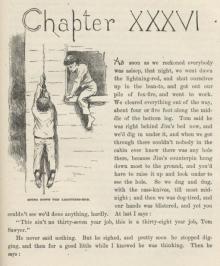 Adventures of Huckleberry Finn, Chapters 36 to the Last
 The Mysterious Stranger, and Other Stories
 A Tramp Abroad — Volume 03
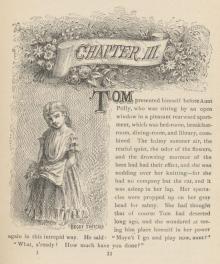 The Adventures of Tom Sawyer, Part 3.
 Adventures of Huckleberry Finn, Chapters 06 to 10
_preview.jpg) The Adventures of Huckleberry Finn (Tom Sawyer's Comrade)
The Adventures of Huckleberry Finn (Tom Sawyer's Comrade) Adventures of Huckleberry Finn, Chapters 31 to 35
 The Man That Corrupted Hadleyburg, and Other Stories
 A Tramp Abroad — Volume 07
 Editorial Wild Oats
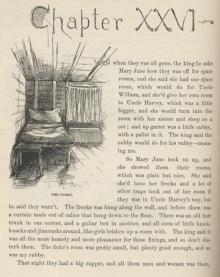 Adventures of Huckleberry Finn, Chapters 26 to 30
 1601: Conversation as it was by the Social Fireside in the Time of the Tudors
 A Tramp Abroad — Volume 05
 Sketches New and Old, Part 1.
 The Adventures of Tom Sawyer, Part 2.
 A Connecticut Yankee in King Arthur's Court, Part 8.
 A Tramp Abroad — Volume 01
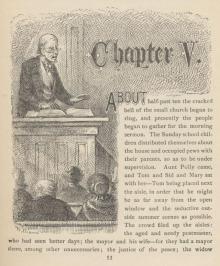 The Adventures of Tom Sawyer, Part 5.
 Adventures of Huckleberry Finn, Chapters 01 to 05
 A Connecticut Yankee in King Arthur's Court, Part 1.
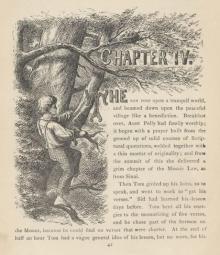 The Adventures of Tom Sawyer, Part 4.
 A Connecticut Yankee in King Arthur's Court, Part 2.
 The Adventures of Tom Sawyer, Part 7.
 A Connecticut Yankee in King Arthur's Court, Part 3.
 Sketches New and Old, Part 4.
 Sketches New and Old, Part 3.
 A Connecticut Yankee in King Arthur's Court, Part 7.
 A Connecticut Yankee in King Arthur's Court, Part 5.
 A Connecticut Yankee in King Arthur's Court, Part 6.
 A Connecticut Yankee in King Arthur's Court, Part 4.
 Sketches New and Old, Part 2.
 Sketches New and Old, Part 6.
 Adventures of Huckleberry Finn, Chapters 11 to 15
 Personal Recollections of Joan of Arc
 Sketches New and Old, Part 5.
 Eve's Diary, Part 3
 Sketches New and Old, Part 7.
 Mark Twain on Religion: What Is Man, the War Prayer, Thou Shalt Not Kill, the Fly, Letters From the Earth
 Tales, Speeches, Essays, and Sketches
 A Connecticut Yankee in King Arthur's Court, Part 9.
 Our Fellow Savages of the Sandwich Islands (version 1)
 1601
1601 Letters from the Earth
 Curious Republic Of Gondour, And Other Curious Whimsical Sketches
 The Mysterious Stranger
 Life on the Mississippi
 Roughing It
 Alonzo Fitz and Other Stories
 The 30,000 Dollar Bequest and Other Stories
 The Adventures of Huckleberry Finn taots-2
 A Double-Barreled Detective Story
 adam's diary.txt
 A Horse's Tale
 Autobiography Of Mark Twain, Volume 1
 The Comedy of Those Extraordinary Twins
 Following the Equator
 Goldsmith's Friend Abroad Again
 No. 44, The Mysterious Stranger
 The Stolen White Elephant
 The $30,000 Bequest and Other Stories
 The Curious Republic of Gondour, and Other Whimsical Sketches
 Prince and the Pauper (Barnes & Noble Classics Series)
 The Portable Mark Twain
 Connecticut Yankee in King Arthur's Court (Barnes & Noble Classics Series)
 The Adventures of Tom Sawyer taots-1
 A Double Barrelled Detective Story
 Eve's Diary
 A Dog's Tale
 The Mysterious Stranger Manuscripts (Literature)
 The Complete Short Stories of Mark Twain
 What Is Man? and Other Essays
 The Adventures of Huckleberry Finn
 Adventures of Huckleberry Finn and Zombie Jim
 Who Is Mark Twain?
 Christian Science
 The Innocents Abroad
 Some Rambling Notes of an Idle Excursion
 Autobiography of Mark Twain
 Those Extraordinary Twins
 Autobiography of Mark Twain: The Complete and Authoritative Edition, Volume 1